
AUTUMN FISHING
- SHOP WITH CONFIDENCE
- Delivery Immediate delivery
- CUSTOMER SERVICE by anglers
- EASY RETURNS 30-day return policy
- PAY SECURELY with Klarna
Fly Fishing Lines


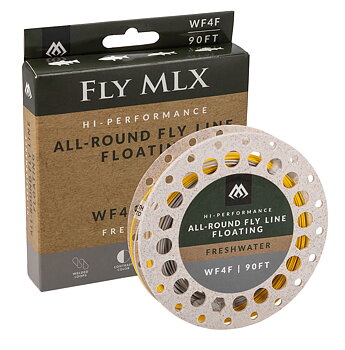
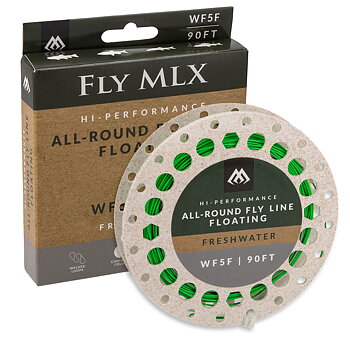


Fly fishing lines come in different weight classes, which in turn should match the rod you’re using. For example, when fishing for trout, grayling, and perch, you don’t want a line that’s too light, but you also don’t want one that’s too heavy. This class is called #5/6, and it’s important that both the rod and the line have this classification to ensure the best possible casts.
For example, there are different lengths of the weighted section. The weighted section is the part of the line that contains the weight; a typical, easy-to-cast length for this section is about 8.5 meters. It’s the weighted section that gives you power in your casts and allows you to get the line out properly. After the head comes the running line, followed by the backing. Some lines have loops at both ends, others have a loop at the very front, and some have no loop at all—in which case you’ll need to tie one on yourself.
Fly lines for single-handed fly fishing—find the right fly line for trout, grayling, rainbow trout, and sea trout
Are you looking for fly lines for single-handed fly fishing and want to find the right line for your rod, your casting technique, and your fishing style? With the right single-handed fly line, it becomes easier to cast with precision, present the fly naturally, and adapt your fishing to wind, flowing water, and various fishing conditions. Whether you’re fishing for brown trout in mountain streams, grayling in flowing rivers, rainbow trout in put-and-take waters, or sea trout along the Swedish coast, there are fly lines that will help you get more out of your fly fishing.
In our selection of fly lines for single-handed fly fishing, you’ll find options for different rod classes, casting styles, and fishing methods. Discover floating lines, sinking lines, intermediate lines, sink-tip lines, and WF lines with various head lengths and tapers. With the right combination of fly line, fly rod, and fly reel, you’ll gain better control over your presentation and can adapt your gear for everything from small dry flies to nymphs, streamers, and larger coastal flies. Whether you’re a beginner or an experienced fly fisherman, choosing the right fly line is an important part of a well-balanced single-handed setup.
Fly Lines for Single-Hand Fly Fishing—Choose the Right Line for Your Fishing
The fly line is a central part of fly fishing gear. Unlike traditional spin fishing, it is primarily the weight and characteristics of the fly line that enable you to load the rod during the cast and carry the fly through the air. Therefore, the line must match the rod’s class and be suited to the flies and fishing methods you use.
A well-chosen single-handed fly line can make it easier to cast short, precise casts in tight spots, reach farther out over lakes and coastal areas, or present the fly with control in running water. The line’s taper, head length, density, and surface coating affect how it loads the rod, behaves in the air, and handles on the water.
When choosing a fly line, you should therefore base your decision on your fly rod, the type of flies you use, and where you fish most often.
WF Fly Lines—A Versatile Choice for One-Hand Fly Fishing
WF, or Weight Forward, is a common design for modern fly lines. The line has a weight distribution where most of the weight is concentrated toward the front, which helps load the rod during the cast. WF lines come in various tapers to suit everything from light dry-fly fishing to heavier streamers and coastal flies.
A WF fly line is often a good choice for anglers seeking a versatile line for a variety of fishing situations. Depending on the design, it can be tailored for short, precise presentations, longer casts, or for retrieving larger, wind-sensitive flies.
WF lines are used, among other things, for single-handed fly fishing for brown trout, grayling, rainbow trout, char, sea trout, and perch. For pike fly fishing with one-handed gear, a line with a suitable head and sufficient power to cast larger flies can be particularly useful.
Floating lines for dry flies, nymphs, and all-around fishing
Floating lines are a popular first choice for single-handed fly fishing because they suit many different fishing methods. The line floats on the water’s surface and provides good control when fishing with dry flies, while it can also be used for nymphs and certain streamers depending on the leader, fly, and fishing technique.
For those who fish for trout and grayling in flowing water, a floating line is a good option when you want to present dry flies and control line arcs and drift. It also works well for rainbow trout fishing in lakes and put-and-take waters, where you can switch between dry flies, nymphs, and lighter streamers.
Floating lines come in various tapers and head lengths. A line with a taper designed for delicate presentations may be suitable for smaller flies, while a more powerful construction might be better if you frequently switch to larger or heavier patterns.
Intermediate fly lines – for fishing just below the surface
Intermediate lines sink slowly and are used when you want to fish the fly just below the water’s surface. They are particularly useful when fish are hunting small fish or other prey moving near the surface but aren’t taking flies presented above it.
When fishing for sea trout from the shore, intermediate lines are a common choice because they help keep the fly at a relatively consistent depth during the retrieve. They’re also used when fishing for brown and rainbow trout in lakes when the fish’s activity and feeding habits make a presentation just below the surface appropriate.
Intermediate lines come in various sink rates and constructions. Choose a line based on fishing depth, fly type, and how quickly you want the fly to move through the water.
Sinking lines and sink-tip lines—when the fly needs to reach deeper
Sinking lines are designed to carry the fly below the water’s surface and can be useful when fish are holding deeper or when you want to fish effectively through water layers where a floating line isn’t sufficient. They come in different sink rates, allowing you to adjust your presentation based on water depth and current conditions.
Sink-tip lines feature a sinking tip and a floating or slower-sinking section behind the tip, depending on the model. This design can be practical when you want to get the fly down while maintaining some control over the line near the surface.
Sinking fly lines and sink-tip lines are used, among other things, for streamers when fishing for brown trout, rainbow trout, and perch, as well as for certain types of coastal and predator fishing. To choose the right sink rate, consider how deep you want to fish, how fast the fly should be presented, and whether you’re fishing in still or flowing water.
Fly Lines for Brown Trout—Precision in Streams, Creeks, and Rivers
One-handed fly fishing for trout can involve everything from delicate presentations in small streams to longer casts across lakes and larger rivers. Therefore, it’s important to choose a fly line that suits both your rod class and the type of flies you’re using.
For dry fly fishing in smaller bodies of water, a line with good control and appropriate tapering is often a good choice. For nymph and streamer fishing, other tapers or lines with sinking properties may be more suitable.
With the right fly line, it becomes easier to adapt your casting distance, presentation, and line handling to the water conditions. Whether you’re fishing for resident trout or migratory trout, there are single-handed fly lines designed for various techniques and conditions.
Fly Lines for Grayling—Control and Presentation in Running Water
Grayling fishing with a single-handed fly rod is often associated with dry flies and nymphs in flowing water. Here, the line’s ability to handle short casts and provide control over the presentation can be crucial, especially when the fish are in currents where a natural drift is essential.
A floating line is often a suitable choice for dry flies and many nymph techniques. The best taper depends, among other things, on rod class, casting distance, and fly size.
For those who want to fish for grayling in Swedish rivers and streams, a well-matched single-handed fly line can contribute to smoother casts and better control of the fly through various current sections.
Fly Lines for Rainbow Trout and Arctic Char—Match the Line to the Fishing Depth
When fishing for rainbow trout in lakes and put-and-take waters, you may need to switch between dry flies, nymphs, and streamers. A floating line is a good starting point for varied fishing, while intermediate and sinking lines can be useful when the fish are deeper.
When fishing for char, the choice of fly line can also affect how effectively you reach the right water column. If you’re fishing in mountain lakes or other deep waters, a sinking line can be a good complement to a floating line, depending on your fishing method and conditions.
By choosing the right line and adjusting the leader, fly, and retrieve speed, you can vary your presentation depending on where the fish are located.
Fly Lines for Sea Trout—for Coastal Fishing Along Sweden’s Shores
Coastal fishing for sea trout often places special demands on the fly line. Wind, waves, and the need to cast relatively far mean that a line with appropriate tapering and good ability to turn over coastal flies can be a good choice.
WF lines designed for coastal fishing can help you manage the wind and present the fly effectively. Floating lines work well in many situations, while intermediate lines are often used when fishing the fly just below the surface.
The choice depends on the depth of the shoreline, wind conditions, fly size, and how you want the fly to move. With the right single-handed fly line, you can create a well-balanced setup for coastal sea trout fishing in a variety of conditions.
Fly Lines for Perch and Pike—for Streamers and Predator Flies
Single-handed fly fishing for perch and pike may require different lines than traditional dry-fly fishing, especially when using larger and heavier flies. The line’s taper and ability to carry the fly through the air become particularly important in these situations.
For perch, an all-around WF line may be suitable when fishing with smaller streamers and other lighter flies. For pike, you need to ensure that both the rod class and the line are appropriate for the size and air resistance of the flies. Larger pike flies may require heavier tackle than what a standard light single-handed fly rod is designed for.
Choose a line that matches the rod’s recommended class and the total load from the fly and leader. A well-matched combination makes it easier to cast safely and handle larger flies.
Fly Line Class – Match the Line to Your Single-Hand Fly Rod
The fly line class is one of the most important factors when choosing a new fly line. The classification is used to match the line’s weight to the fly rod’s characteristics. Common classes for single-handed fly fishing include #3, #4, #5, #6, #7, and #8, but there are both lighter and heavier options available.
- Class #3–#4: Often suitable for lighter fly fishing with small flies in smaller bodies of water.
- Class #5: a popular all-around class for many types of trout and rainbow trout fishing.
- Class #6: suitable for larger flies, lake fishing, and certain coastal situations.
- Class #7–#8: often used when you need more power for coastal flies and larger streamers.
These are general guidelines. The line’s actual weight profile and the rod’s construction affect how the combination performs. First and foremost, follow the rod manufacturer’s recommendations and check the line’s specifications before purchasing.
Tapering and Head Length—Characteristics That Affect the Cast
A fly line’s taper describes how the line’s diameter and weight are distributed along its length. It affects how the line loads the rod, how energy is transferred to the leader, and how the fly is presented.
A line with a taper designed for short casts can be useful in tight waters, while other designs are developed for longer casts or for turning over larger flies. The head length also affects how the line handles with different casting styles.
If you often fish in small streams, a line that loads the rod effectively over short distances can be practical. For coastal or lake fishing, a different taper may be better suited when you need longer casts and have to deal with wind.
How to Choose the Right Single-Hand Fly Line
When buying a new fly line, it’s a good idea to start by considering how you fish most often and what equipment you already have. The right line should suit both your rod and the flies you plan to use.
- Start with the rod class: check what line weight the rod is designed for.
- Choose the right density: a floating line for surface fishing, an intermediate line for fishing just below the surface, and a sinking line for deeper presentations.
- Adjust the taper: choose based on casting distance, fly size, and desired presentation.
- Consider the fish species: trout and grayling often require different characteristics than coastal fishing for sea trout or fishing with large pike flies.
- Check the line’s length and construction: choose a line that suits your fishing method and the amount of backing you need on the reel.
- Match your entire setup: the rod, line, leader, and fly should work together.
- Consider the fishing conditions: wind, current, water depth, and temperature canall affect which line is best suited.
For many fly fishermen, a floating WF line is a good place to start. As you want to develop your fishing skills, an intermediate or sinking line can offer more opportunities to customize your presentation.
Buy fly lines for one-handed fly fishing online
Whether you’re looking for a WF floating line for all-around fishing, a specialized dry fly line, an intermediate line for sea trout, or a sinking line for streamer fishing, there are one-handed fly lines for various needs and fishing methods.
Explore our selection of fly lines for single-handed fly fishing and find the right line for your fly rod, your favorite flies, and your fishing adventures. With a well-chosen fly line, you’ll be better equipped to develop your casting technique, adjust your presentation, and get more out of fishing in Swedish lakes, rivers, mountain streams, and along the coast.
Find your new single-handed fly line and take the next step in fly fishing—whether your goal is trout in running water, rainbow trout in a lake, or sea trout along the coast!