
Match/Waggler Rods



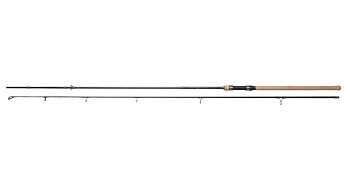
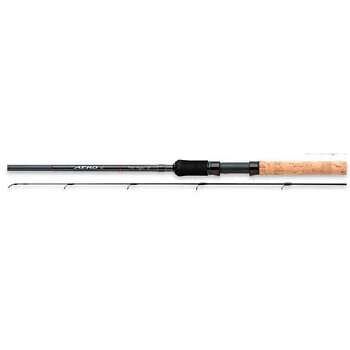
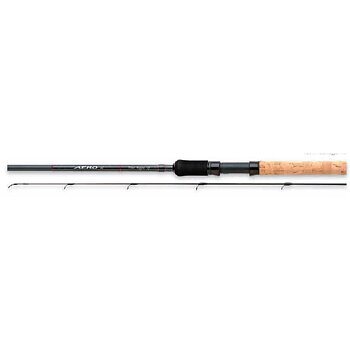
Match rods and waggler rods are specialized fishing rods used primarily for float fishing , often when you want to present the bait precisely, cast far , and detect even the most subtle bites. They have a long tradition in European float fishing, particularly in the United Kingdom, where the technique has been developed for fishing in everything from small ponds to large lakes and slow-moving streams.
What sets these rods apart is the combination of relatively low weight, multiple guides, a well-designed action, and a construction that allows for casting light or moderately heavy floats with good precision. They are particularly valued when fishing for species such as roach, rudd, bleak, bream, tench , and smaller carp species, but can also be used for larger fish when the tackle is properly sized.
An important distinction is that “match rod” refers to a type of rod, while “waggler” refers to a type of float and a fishing method. The terms therefore overlap : a waggler rod is usually a type of match rod, but not all match rods are optimal for every waggler technique.
What is a match rod?
A match rod is a relatively long and lightweight fishing rod designed for precision casting with line, hook, sinker , and often a float. Traditional match rods are usually about 3.6–4.5 meters long, although both shorter and longer models exist.
This type of rod was developed to meet the needs of competitive anglers, for whom it is important to be able to cast repeatedly to the same spot, control the line, handle small hooks and thin leaders , and land fish quickly without unnecessary line breaks.
Typical characteristics are:
-
Length: usually about 12–15 feet, equivalent to 3.6–4.5 meters.
-
Construction: usually two or three sections, typically made of carbon fiber or carbon fiber composite.
-
Guides: many relatively small guides to distribute the load and keep the line away from the tip.
-
Action: often progressive, with a soft tip and a blank that gradually engages as the load increases.
-
Casting weight: usually suited for light to medium-weight floats and sinker systems.
-
Reel: Normally a spinning reel, often in the 1000–3000 size range depending on the rod, fishing method, and line choice.
A match rod isn’t just for casting the float. It should also help the angler guide the line during the cast, control line loops, detect contact with the fish , and dampen sudden runs.
What is a waggler rod?
A waggler rod is a match rod that is particularly suited for fishing with a waggler— that is, a float attached to the lower end of the line and normally weighted with a sinker on the line.
Unlike, for example, a standard fixed -top float or other types of sliding floats , the waggler is typically secured at the lower end, providing a stable and predictable presentation. This design is particularly well-suited for fishing in still water and can also be used in slow-moving water when conditions are favorable.
Waggler fishing has several distinctive features:
-
The float can be cast with good precision over medium and long distances.
-
Most of the casting weight can be concentrated near the float, providing controlled flight.
-
The line can sink below the water’s surface after the cast to minimize the impact of wind and surface currents.
-
The bait can be presented at a specific depth and with a sensitivity adjusted to the fish’s wariness.
-
The angler can use everything from very small, sensitive floats to heavier distance floats.
A dedicated waggler rod often prioritizes smooth casts with relatively light floats, precise line control , and good control at a distance. A sturdier match rod, on the other hand, may be better when the float is heavy, the wind is strong, or the fish are large.
Which fish species are best suited for match and waggler rods ?
|
Fish Species |
Suitable Application |
Comment |
|---|---|---|
|
Roach |
Light match rod |
Small hooks and sensitive floats |
|
Rudd |
Light or all-around waggler |
Suitable for both near-surface and deeper fishing |
|
Roach |
Light match rod |
Requires small baits and delicate tackle |
|
Bream |
All-around or long-distance waggler |
Longer casts and a stable rig can be useful |
|
Tench |
Heavier all-around or power float |
Requires a margin for strong runs |
|
Carp |
Pellet waggler or power float |
The rod, line, and drag must be sized for the fish |
|
Perch |
Light waggler |
Works well with worms and small lures |
|
Chub and other fast-flowing water species |
Specialized match or float rod |
Requires special attention to current and float control |
It is possible to catch large fish with a light match rod, but that does not mean every light model is suitable for targeted fishing for large carp or tench. The rod’s strength, the size of the leader, and the ability to control the fish must all be taken into account.
Summary
Match and waggler rods are primarily designed for controlled float fishing, where casting accuracy, sensitivity, and line handling are crucial. A classic match rod of about 3.9 meters with a moderately flexible or progressive action provides a very useful starting point for many types of Swedish lake and pond fishing.
The most important thing is not to choose the longest, lightest, or most expensive rod, but to find a combination of length, action, casting weight, and balance that suits the float, the fishing method, and the species you want to catch.
For traditional fishing for roach, rudd, and bream, a light or medium-action all-around waggler rod is often a good choice. For long casts across large lakes, a longer distance rod may be better, while active carp fishing with a pellet waggler usually requires a shorter and stiffer specialized model.